
Your First Hire at a Pre-Seed Startup: Engineer vs Sales vs Ops
A framework for choosing your first startup hire based on what's actually limiting growth.
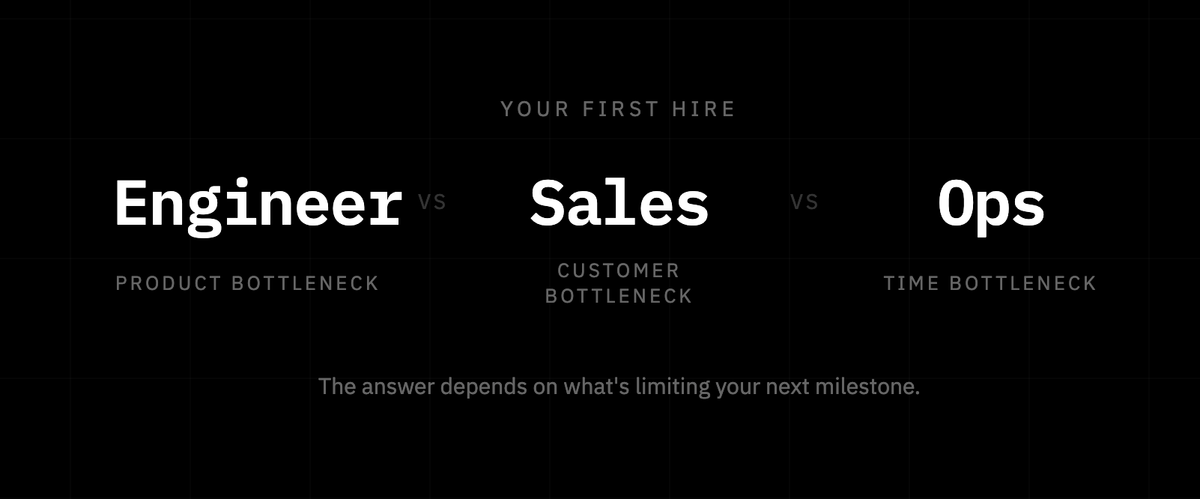
Most founders default to engineer.
Technical founders because the product needs work. Non-technical founders because they can't build anything themselves.
Both are reasonable. But both can also be wrong if they're based on familiarity rather than your actual bottleneck.
Scene 1: The bottleneck test
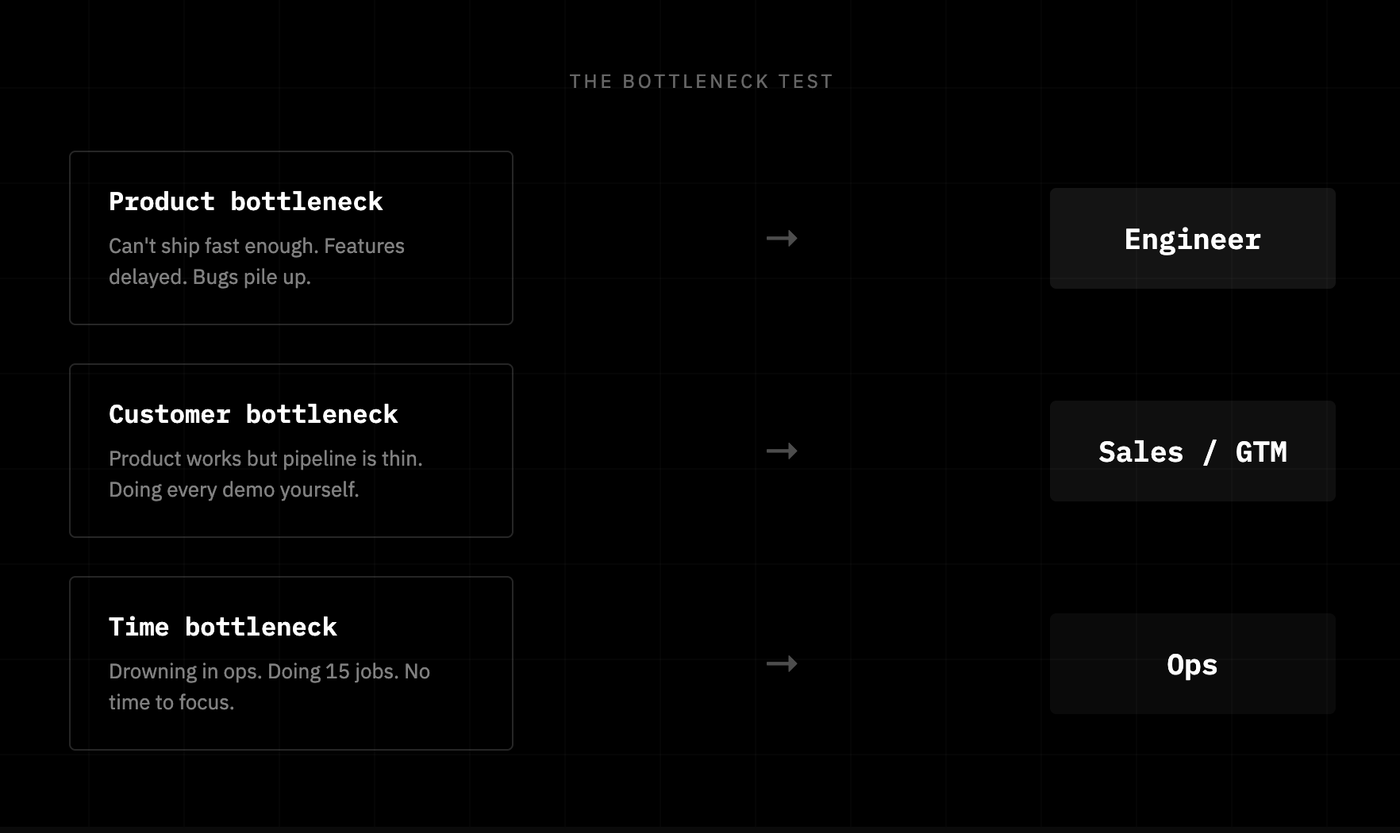
Your first hire should fix whatever is limiting your next milestone.
Three bottlenecks. Three hires.
Product bottleneck. You can't ship fast enough. Features delayed. Bugs pile up. The founders are coding until 2am and still falling behind. Hire an engineer.
Customer bottleneck. You have a product that works but can't get it in front of enough people. You're doing every demo yourself. Pipeline is thin. Hire GTM.
Time bottleneck. Founders are drowning in ops. Investor updates, legal, finance, customer support. The business runs, but only because you're doing 15 jobs. Hire ops.
Most pre-seed companies have a product bottleneck. That's why engineers dominate early hiring. But by seed, the bottleneck often shifts.
Carta data shows sales accounted for 19.9% of all startup hires in 2024, up from 14.8% in 2020. That's the second most common function behind engineering.
If your bottleneck has shifted and your hiring hasn't, you're solving yesterday's problem.
Scene 2: The multiplier question
Your first hire doesn't just do work. They set the standard.
They're the first person outside the founding team. The first reference point for what good looks like. The first culture signal.
A strong first hire attracts other strong hires. A weak one makes the next hire harder. And the one after that.
The question isn't just "can they do the job?" It's: would I want to hire five more people like them?
Scene 3: The equity math
First hires carry more weight. The compensation reflects that.
Carta data on early-stage equity grants:
- First hire: ~1.5%
- Fifth hire: ~0.3%
- Tenth hire: ~0.18%
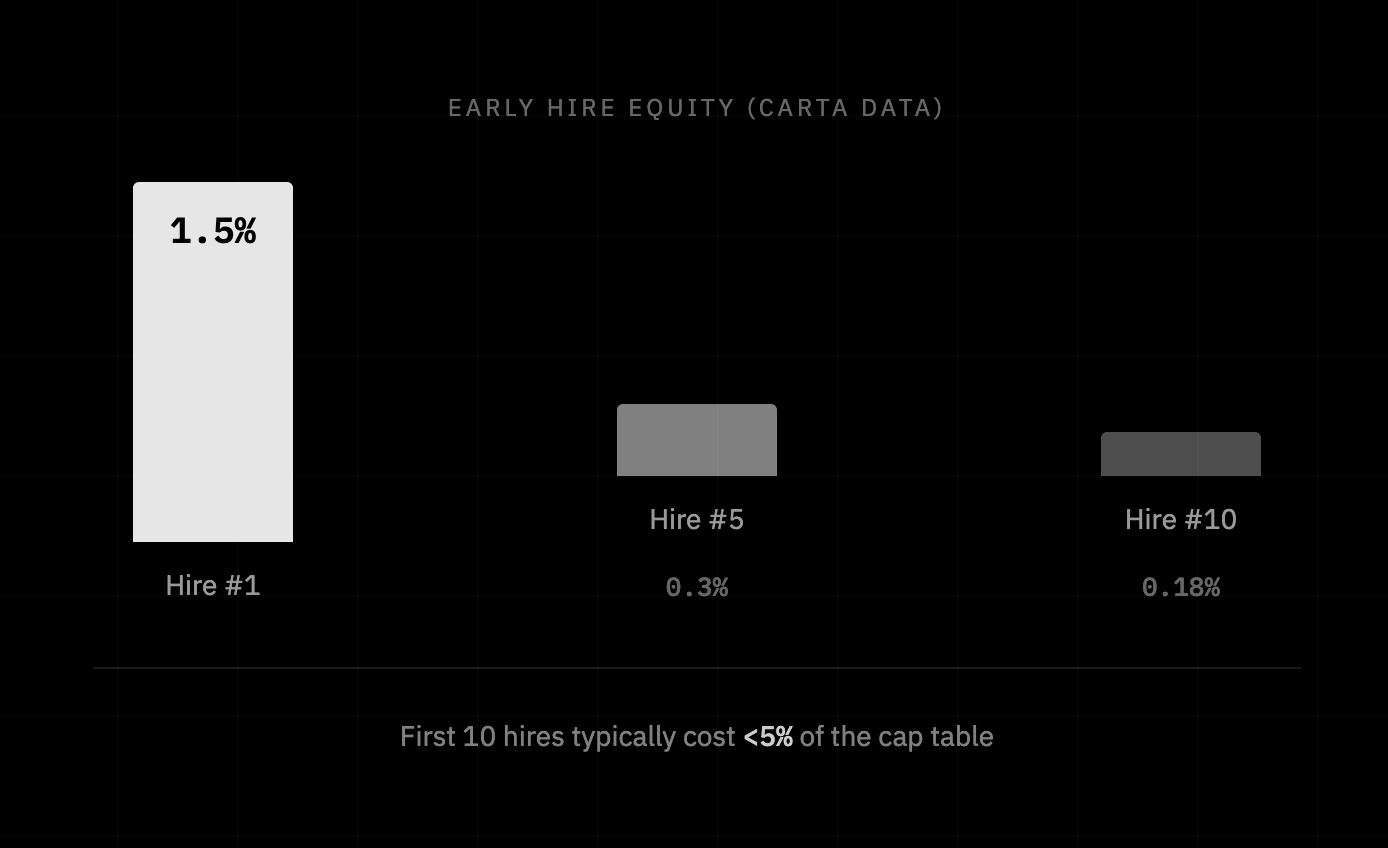
The first ten hires typically cost less than 5% of the cap table total.
For true early hires, 0.3% to 1.5% is a common range depending on role, seniority, and stage. Technical and senior roles tend toward the higher end. Junior and non-technical roles toward the lower.
If you're offering below-market salary, lean toward more equity. At-market salary, less.
The thread that connects all three scenes
Your first hire isn't about filling a role. It's about removing your biggest bottleneck.
The founders who get this right ask: what's the one thing limiting our next milestone? Then they hire for that.
The simple move for this week
Before you write a job description:
- Name your bottleneck. Product, customers, or time? Be honest. Not what you wish it was. What it actually is.
- Check if founders can cover it. If one founder can do sales for another 6 months while you build, maybe you still need an engineer.
- Talk to three people in the role. Before hiring, interview people already doing the job elsewhere. You'll write a better job description and spot red flags faster.
- Use 0.75% as a baseline. That's a reasonable starting point for a mid-level technical first hire. Adjust up for senior, down for junior or non-technical.
- Don't rush. A bad first hire costs more than waiting another month.
Worth getting right the first time.
Sources: Carta State of Startup Compensation H2 2024, Pear VC
Tags
- AI Startups
- Pre-seed
- Hiring
About the author
Zeeshan Ali, Co-Founder
Co-founder at Platvix, building an investment intelligence platform and the ecosystem around it so founders become investment-ready faster and VCs make stronger decisions. I focus on operations, partnerships, and community building, turning strategy into execution through programmes, processes, and founder support.