
Equity is how early teams buy speed
Equity is how early teams buy speed. A practical guide to co-founder splits, vesting, first hires, and SAFE dilution.

The moment this gets real
Most startups don’t break on product. They break on equity and trust.
It usually starts small. A quick split chat. An advisor who wants “a little.” A first hire who asks for a number on the spot. A SAFE that feels standard. None of it feels fatal in the moment.
But equity decisions stick. And once they stick, they shape how fast the company can move.
Equity is also one of the few real advantages early-stage startups have. Cash is tight. Brand is small. The product is still forming. Equity is how a small team buys commitment and speed.
Scene 1: Cofounders
The first equity decision is almost always the split. Equal can work. A lead can work. The split is not the point.
The point is whether the split survives stress.
Carta’s data is a good reminder that cofounder changes are common. In VC-backed two-founder teams, about 24% lose a cofounder by year 4. That is normal startup pressure showing up, not an edge case.
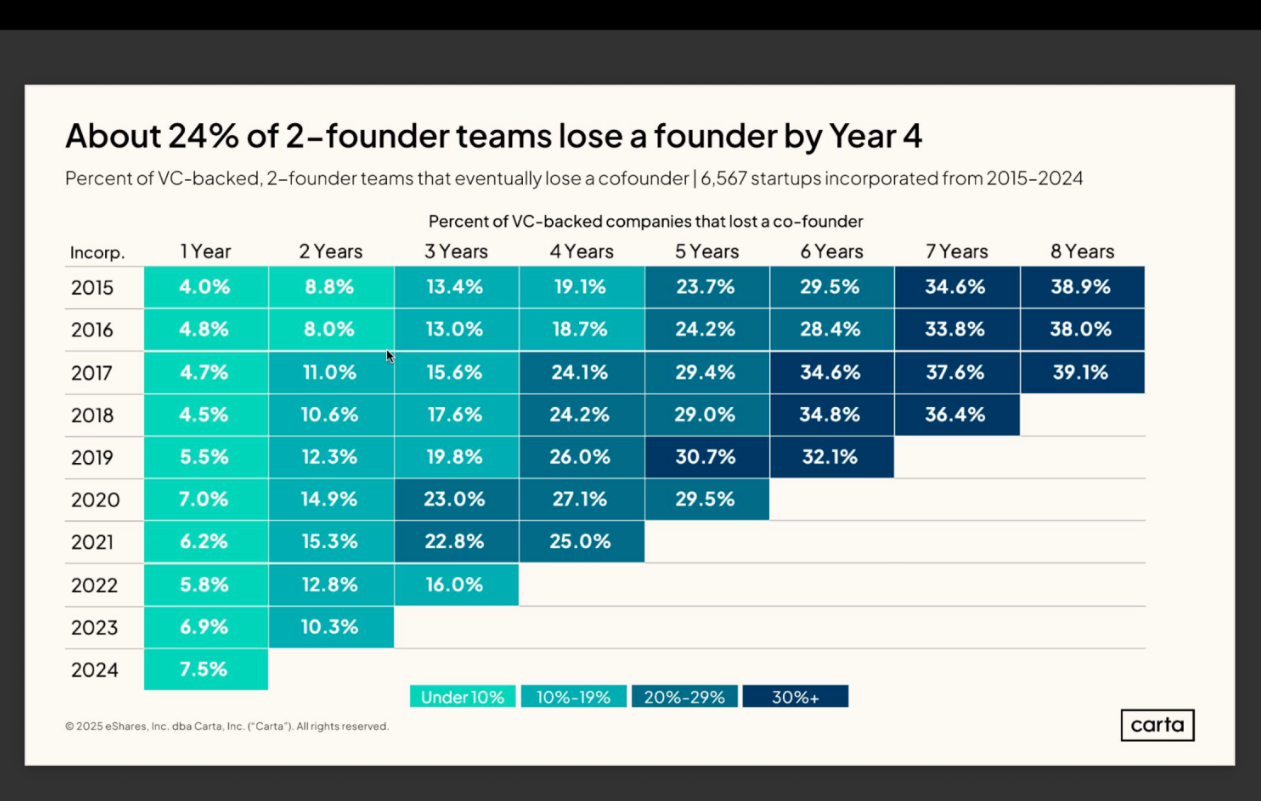
About 1 in 4 VC-backed two-founder teams lose a cofounder by year 4. This is why vesting exists. Source: Carta, State of Seed: Winter 2025.
That one chart is the reason vesting matters. Not because it is “legal.” Because it keeps the company fair if something changes. It also keeps relationships intact because expectations were set early.
Scene 2: The first hire
Then comes the first hire. This is where equity stops being theoretical.
The first offer becomes the baseline for every offer after. If it’s improvised, the company ends up renegotiating the same decision five times. That slows everything down.
Carta’s medians show how quickly grants compress after the first hire. Hire #1 is meaningfully higher than Hire #3 or Hire #5. That is the natural curve.
Equity drops fast after hire #1. Set equity bands early so every offer doesn't become a new negotiation. Source: Carta, State of Seed: Winter 2025.
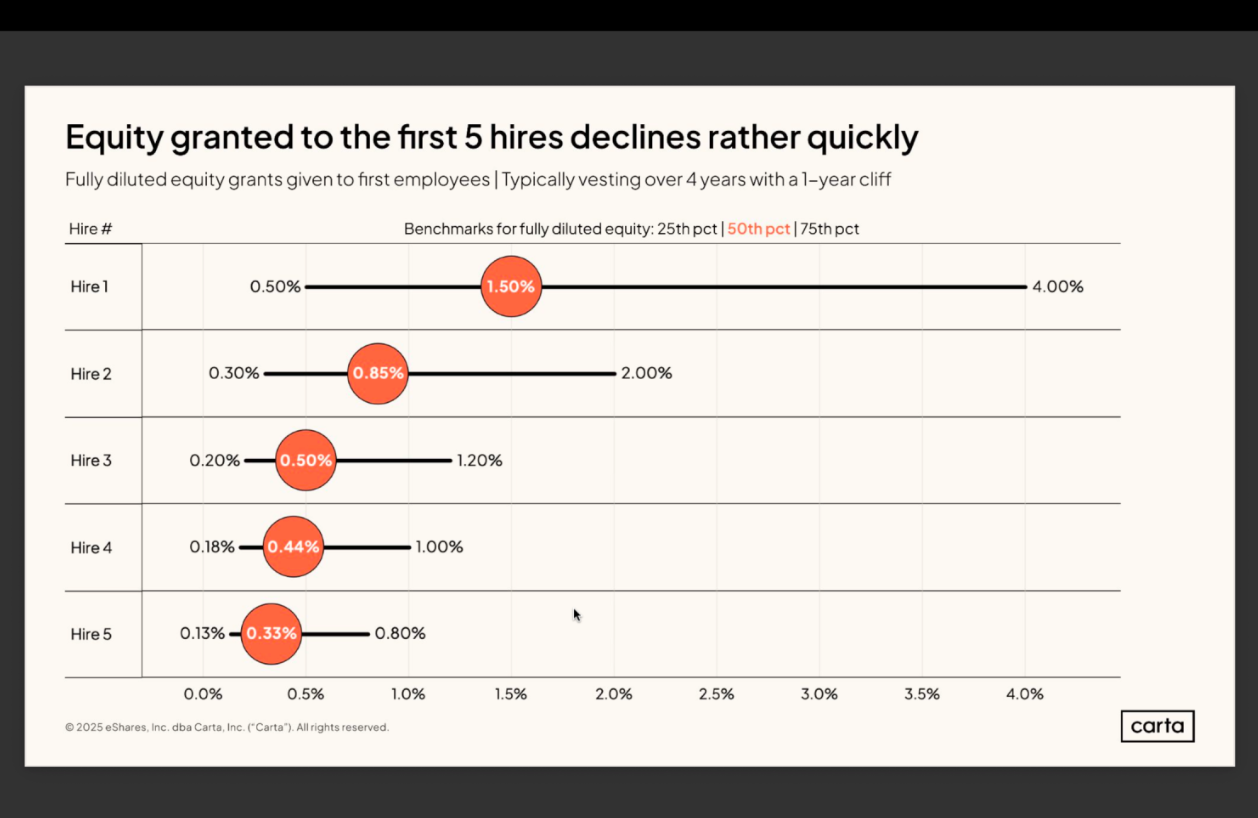
This is the opportunity. A clean equity plan makes hiring easier. It makes offers faster. It makes the team feel treated consistently. It also protects the option pool from getting burned early.
Scene 3: Raising a SAFE
Then fundraising starts. Pre-seed moves fast. SAFEs are simple to sign. That speed is real.
But dilution stacks quietly if there isn’t a budget.
The cleanest way to keep this grounded is to look at dilution by raise size on post-money SAFEs. The median numbers give a practical range for what tends to happen.
Post-money SAFE dilution stacks quickly. Median dilution is ⩬15-20% depending on how much is raised. Source: Carta, State of Seed: Winter 2025.
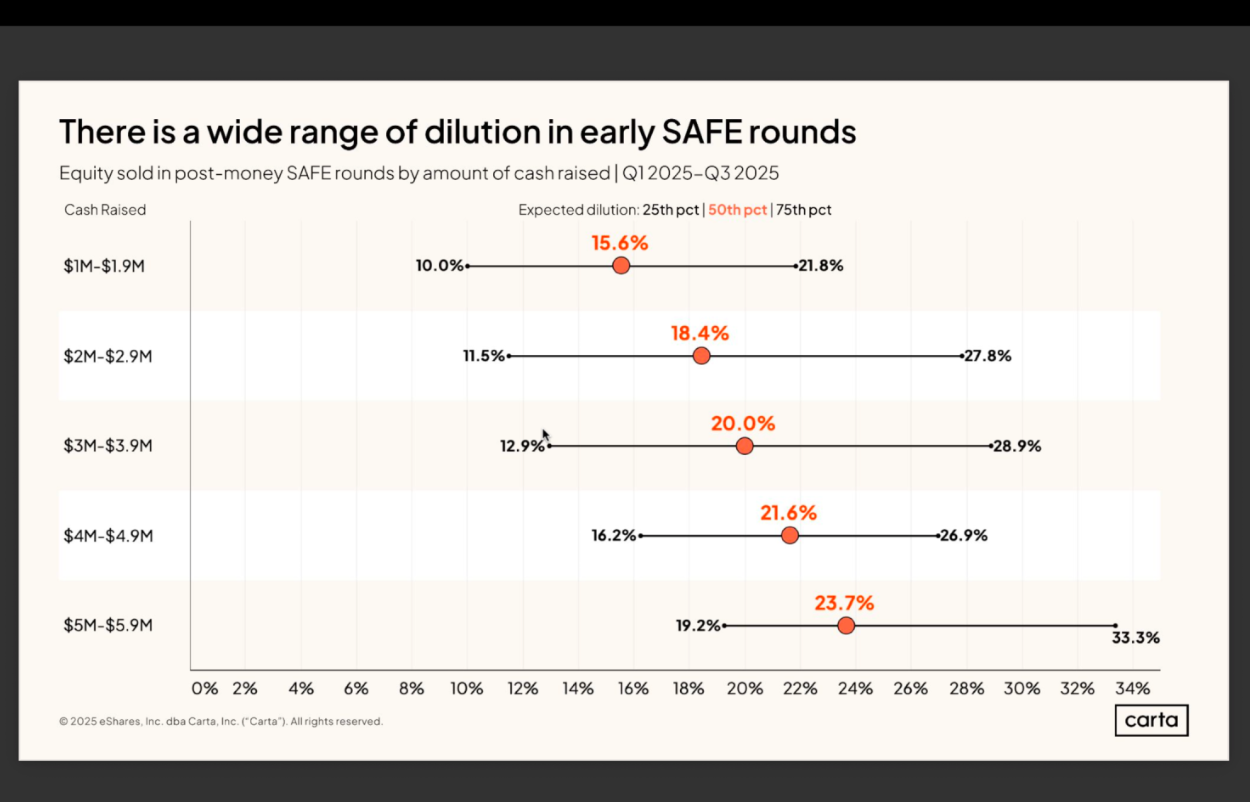
This is not about fear. It’s about planning. If a dilution budget exists up front, the round is easier to negotiate. The cap table stays predictable. Future hires are easier to comp. Seed is cleaner.
The thread that connects all three scenes
A clean cap table buys speed. A messy one taxes everything.
Not because investors care about perfection. Because teams do. Hiring does. Decision-making does. Trust does.
Equity is not the reward for being early. It’s the system that keeps the company fair when things get uneven.
The simple move for this week
Write a one-page equity plan. Keep it boring. Keep it clear.
- Founder split + vesting, written down
- Advisor policy (small, specific, time-bound)
- Equity bands for the first five hires
- A dilution budget for pre-seed and seed
That’s enough to avoid most cap table regrets. And it creates the real opportunity: faster hiring, fewer renegotiations, and more trust when the pressure hits.
Tags
- Equity
- Cap Table
- Vesting
- SAFEs
- idea validation
- Fundraising
About the author
Zeeshan Ali, Co-Founder
Co-founder at Platvix, building an investment intelligence platform and the ecosystem around it so founders become investment-ready faster and VCs make stronger decisions. I focus on operations, partnerships, and community building, turning strategy into execution through programmes, processes, and founder support.