
SEIS/EIS is leverage, not paperwork.
A practical guide to using SEIS and EIS as leverage in your raise, covering eligibility, timing, round structure, and the mistakes that cost founders months.
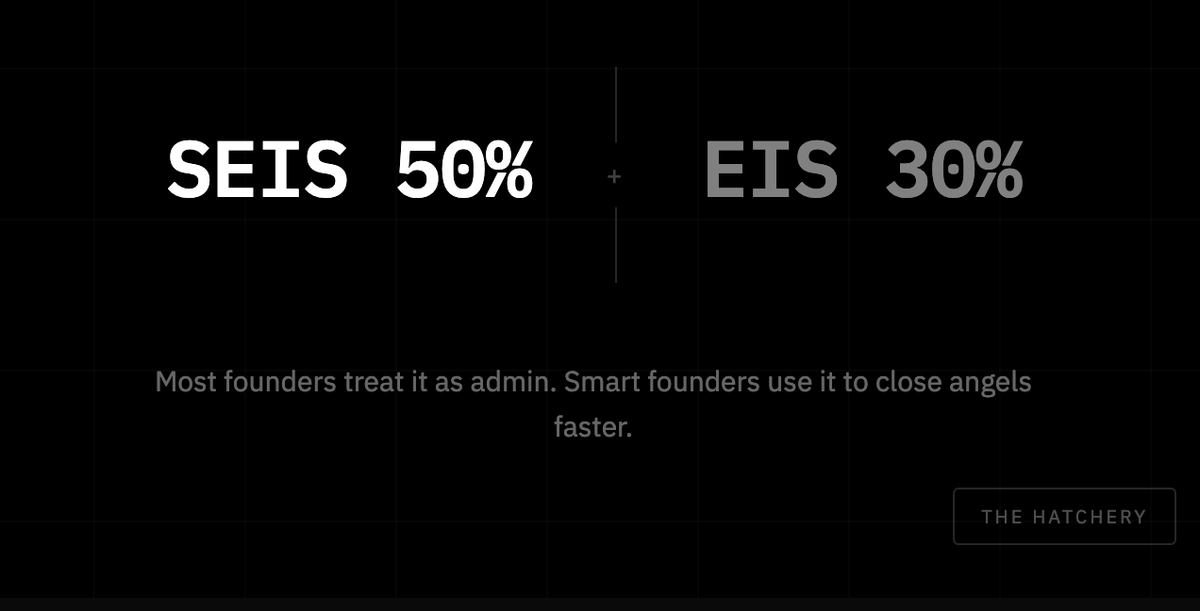
Most UK founders treat SEIS and EIS as admin. Something to sort after the round closes.
Smart founders use it to close angels faster.
Scene 1: The advantage most founders undersell
UK angels get serious tax relief when they invest in qualifying startups:
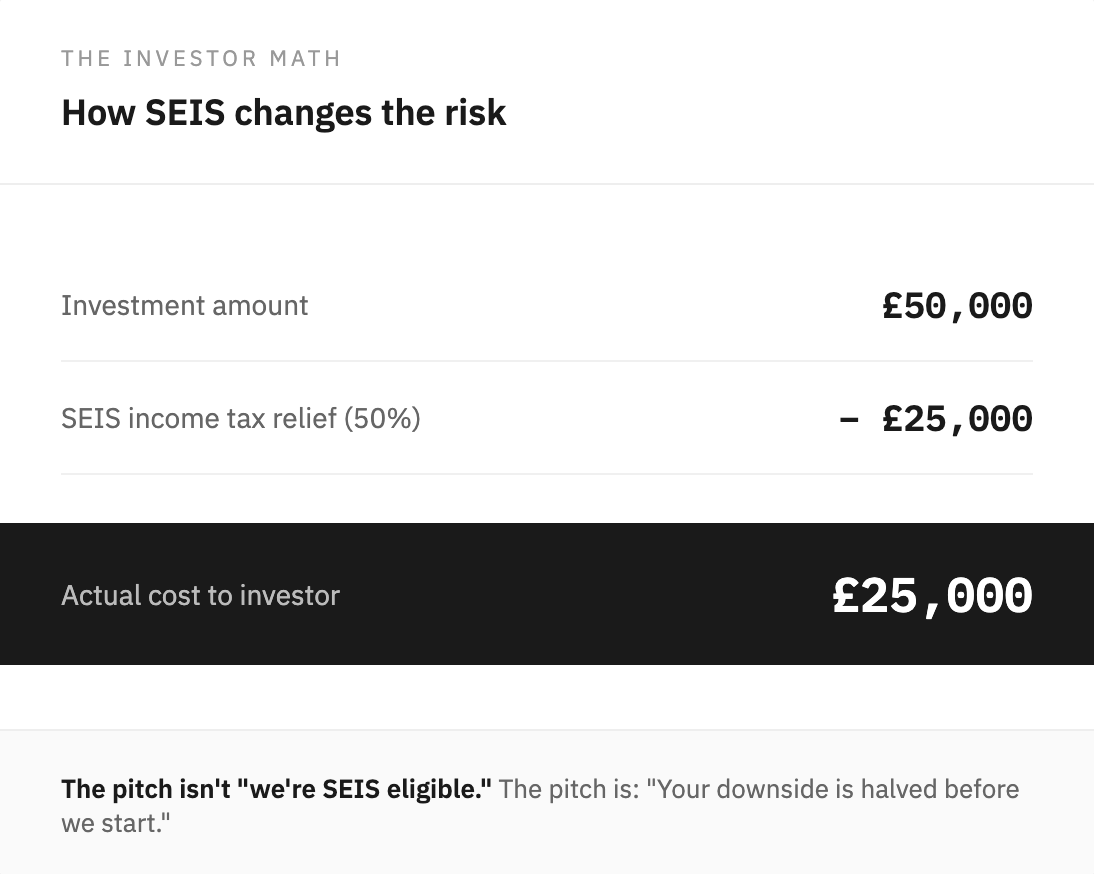
SEIS: 50% income tax relief. A £50K investment costs them £25K after the rebate.
EIS: 30% income tax relief. Plus capital gains deferral. Plus inheritance tax benefits.
This changes the risk math completely. The investor isn't betting £50K. They're betting £25K. And if the company fails, loss relief kicks in too.
53% of UK angels say they won't even consider a startup that isn't SEIS/EIS eligible. That's not a preference. That's a filter.
Yet most founders bury this in a footnote. Or worse, they don't mention it at all.
The pitch isn't "we're SEIS eligible." The pitch is: "Your downside is halved before we start."
Scene 2: The timing mistake
Here's where it breaks down.
Advance assurance is the HMRC confirmation that your company qualifies. It takes time. Not days. Weeks.
Founders who wait until they have investor interest lose the advantage. The angel is ready. The check is ready. But the paperwork isn't.
Or worse: they've already disqualified themselves without knowing it.
Common ways founders lose eligibility:
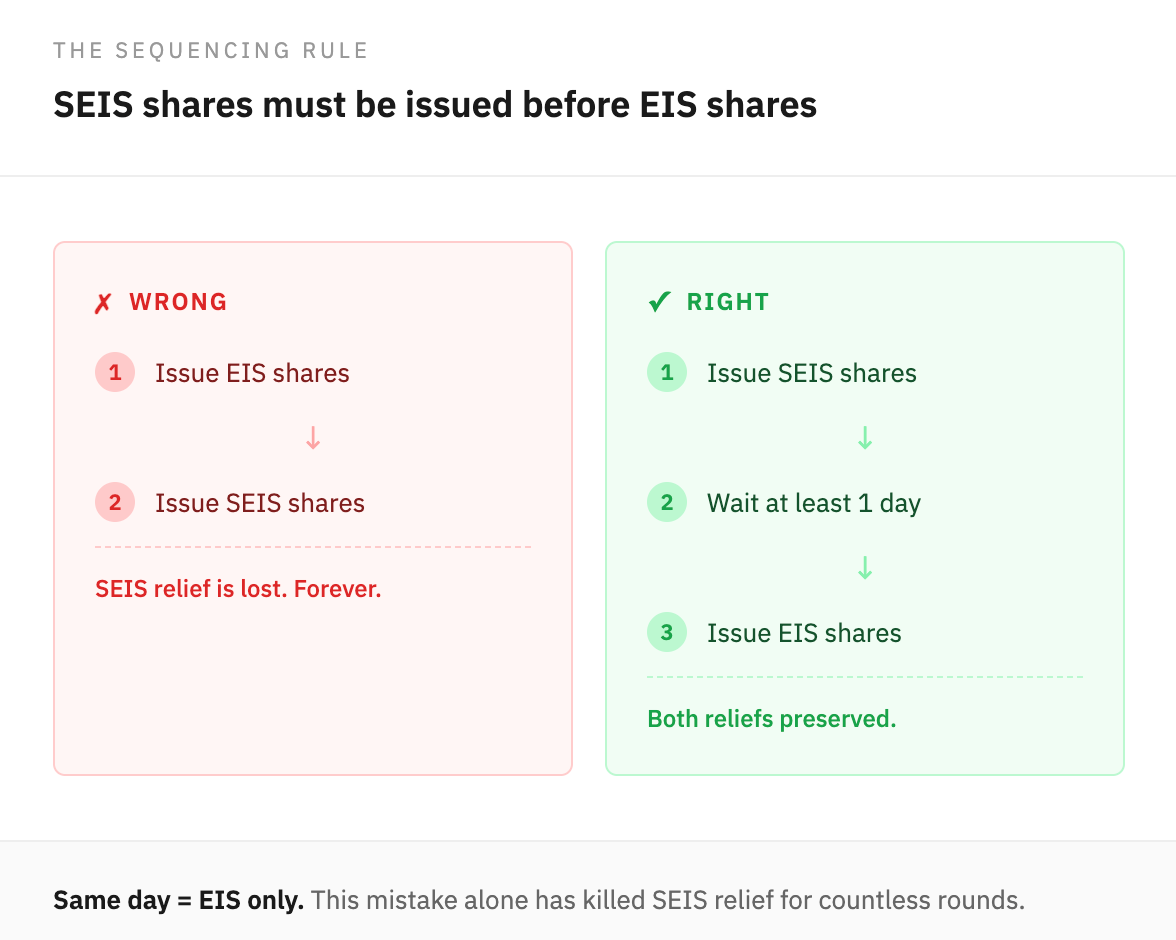
- Issuing EIS shares before SEIS shares (this alone kills SEIS status)
- Exceeding the £250K SEIS company limit
- Having gross assets over £350K at time of investment
- Prior investment from a VCT or EIS round (disqualifies SEIS entirely)
- Running a non-qualifying trade (property, financial services, legal services)
- An investor holding more than 30% after the round
These aren't edge cases. They're the mistakes that delay rounds by months and damage investor relationships before they start.
Scene 3: How rounds get structured wrong
SEIS and EIS can run together. Many rounds include both. But the sequencing is strict.
Rule: SEIS shares must be issued at least one day before EIS shares. Issue them on the same day, and all shares become EIS-only. Your SEIS investors lose 20 percentage points of tax relief.
Rule: You can't go back. Once an EIS compliance statement is filed, it can't be withdrawn. If you file EIS first by mistake, SEIS relief is gone.
Rule: Investors must invest for cash in ordinary shares. No liquidation preferences. No preferential dividends. Any attempt to de-risk the investment disqualifies the relief.
Rule: The company must spend the funds within 3 years on qualifying business activity. HMRC checks.
Rule: Investors must hold shares for at least 3 years. Sell early, lose the relief.
These aren't suggestions. They're binary. Get one wrong, and your investors don't just lose a tax benefit. They lose trust.
The thread that connects all three scenes
SEIS/EIS isn't a form you fill out after the round. It's a fundraising advantage you deploy before the first meeting.
The founders who use it well:
- Get advance assurance before they start raising
- Lead with the tax benefit in every angel conversation
- Structure rounds to maximize investor relief
- Sequence SEIS before EIS, always
- Keep records clean so compliance statements go through fast
The result: faster closes, warmer investor relationships, and a reputation for knowing what you're doing.
The simple move for this week
If you're a UK founder planning to raise from angels in the next 6 months:
- Check eligibility now. Under 3 years old? Fewer than 25 employees? Gross assets under £350K? Qualifying trade? No prior EIS/VCT investment?
- Apply for advance assurance. It's one form. Budget 6-8 weeks for approval. Do it before you start conversations.
- Add it to your pitch. Not as a footnote. As a headline: "SEIS eligible. Your £50K costs you £25K."
- Plan your round structure. Know how much is SEIS (up to £250K) and how much is EIS. Sequence the share issues correctly.
- Get help if you're unsure. The rules are precise. A mistake here costs more than an advisor.
SEIS/EIS is one of the few structural advantages UK founders have over US founders. Use it.
Sources: HMRC, British Business Bank, Dealum (2024-2025 data)
Tags
- Fundraising
- SEIS
- EIS
- Angel investing
- Startups
- Investors
About the author
Zeeshan Ali, Co-Founder
Co-founder at Platvix, building an investment intelligence platform and the ecosystem around it so founders become investment-ready faster and VCs make stronger decisions. I focus on operations, partnerships, and community building, turning strategy into execution through programmes, processes, and founder support.