
What to Build After Your MVP (and How to Say No to Everything Else)
Once the MVP ships, feature requests arrive from every direction. Here is how to weigh them, a four-question filter for deciding what to build next, and how to turn down the rest without losing customers.
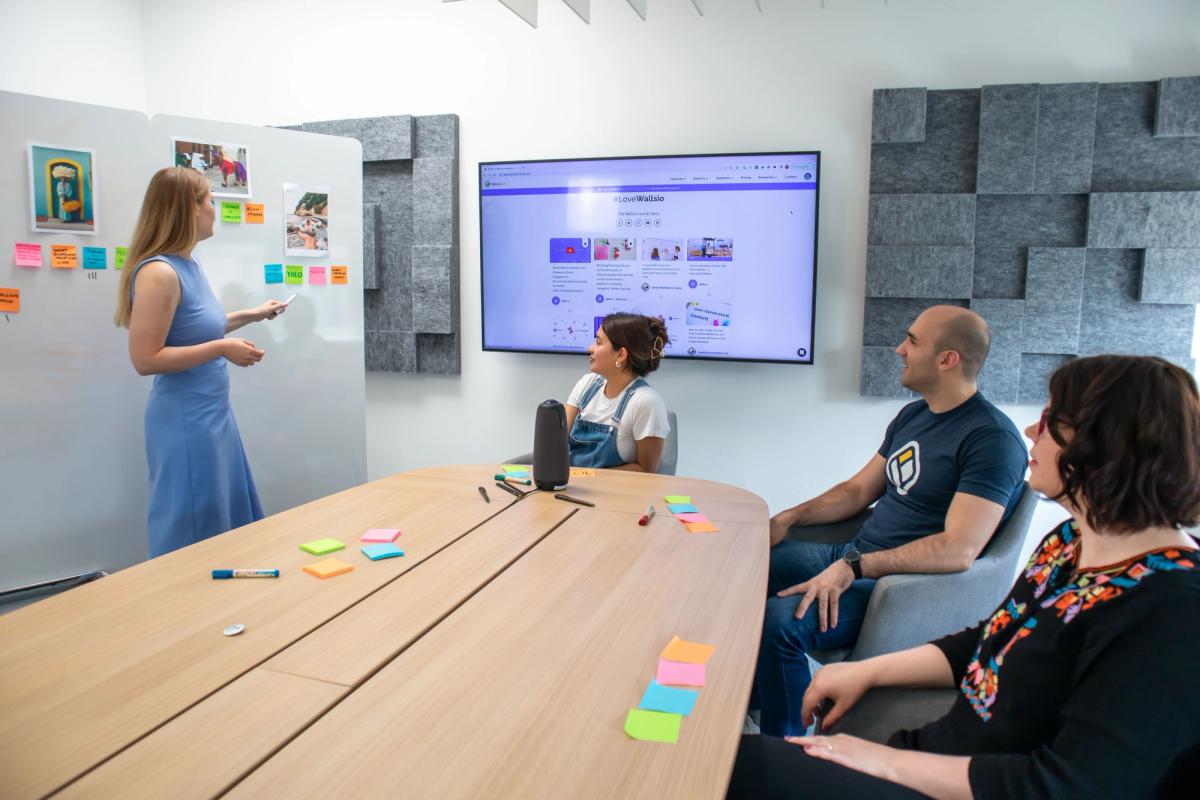
Once the MVP ships, the harder product decisions begin.
Within weeks, requests arrive from every direction. Your first customers want integrations. A prospect says they would sign if you added one more feature. An investor suggests a second product line. A competitor launches something and you wonder whether you need it too.
Most early teams respond by building a little of everything. The product gets wider, each part stays shallow, and nothing becomes good enough for customers to rely on it or pay more for it. This guide covers how to weigh the requests, a simple filter for deciding what to build next, and how to turn down the rest without losing the people asking.
TL;DR
- Requests from paying customers who match your ideal customer profile deserve the most weight. Most other sources deserve much less.
- Before building anything, ask whether it helps your core customer do the main job, whether it is blocking activation, retention or payment, how many customers asked independently, and what it costs to maintain.
- Building for your single largest customer is one of the most common ways early products drift.
- The best next step is often improving what already exists: onboarding, speed and reliability.
- Saying no well means recording the request, explaining your priorities and offering a workaround.
Where Requests Come From, and How Much Weight They Deserve
Every request is information. They are not equally reliable. Roughly in order of weight:
Paying customers in your target segment. They have committed money and they are the people you want more of. Their requests carry the most weight, especially when several ask for the same thing.
What customers do, as well as what they say. Where people get stuck in onboarding, which features they never touch, and the reasons they give when they leave often tell you more than a feature request does.
Users outside your target segment. Useful as a signal of where demand might exist later. Building for them now usually pulls the product away from the customers you are trying to win.
Prospects who say they would buy if you added something. Sometimes true, often a polite way of saying no. Ask whether they would sign a paid pilot conditional on it. Their answer tells you how real the request is.
Investors, advisers and competitors. Worth hearing, and rarely worth building from directly. They are usually describing the market in general, while your customers can tell you about the specific problem your product solves.
A Four-Question Filter for What to Build Next
Run every candidate through these before it goes on the roadmap.
1. Does it help your core customer do the main job? Every product has one job it exists to do for one type of customer. If a feature does not make that job easier, faster or more reliable, it can usually wait.
2. Is it blocking activation, retention or payment? The most valuable work at this stage removes whatever stops people getting value, coming back, or paying. Look at usage data and at the reasons customers give for leaving.
3. How many customers raised it without being prompted? A single request, however loud, tells you about one customer. When several customers in your segment raise the same need independently, you have much stronger evidence.
4. What does it cost to build and to keep? Every feature has to be maintained, documented, supported and tested every time you change something else. A small team pays that cost for years.
If you have not pinned down who your core customer is, this filter has nothing to test against. Start with how to find your ICP.
The One-Big-Customer Trap
Early revenue often comes disproportionately from one or two customers. That is normal, and it creates pressure to build whatever they ask for.
A 2026 ScaleWise survey of UK start-ups, reported by IT Brief, found that 18% were highly dependent on a single large customer, and warned that this can give a misleading impression of product-market fit. When one customer steers the roadmap, the product slowly turns into a custom build for them, and becomes harder to sell to anyone else.
Some ways to handle it:
- Ask two or three other customers whether they need the same thing before committing.
- Charge separately for genuinely custom work, so it is paid for and does not quietly become the roadmap.
- Build it in a way that is useful to the wider segment, even if that takes a little longer.
- Keep winning new customers, so no single account can set your priorities.
Improve What You Have First
The most useful next step is often to make the existing product easier to start using, faster and more reliable, before adding anything new.
Look at where new users drop off before they reach the moment the product proves its value. Look at the bugs your customers have learned to work around. Fixing those tends to improve retention more than adding features, and retention is the number investors look at most closely at seed.
How to Say No Without Losing the Customer
Most customers accept a clear, honest answer. What frustrates them is silence, or a vague yes that never ships.
- Record every request with who asked and why, so patterns become visible over time.
- Ask what they are trying to achieve. The underlying need is often something you already support, or can support in a simpler way.
- Explain your current priority in a sentence, so the answer makes sense.
- Offer a workaround where one exists, and say you will come back if it moves up the list.
A reply you can adapt:
Thanks for this, it is useful to know. We are not building it this quarter, because we are focused on [current priority] for teams like yours. In the meantime, [workaround] should cover most of what you need. I have logged your request, and if more customers need it I will let you know when it moves up.
A Request Worth Building Usually Has
The right source: paying customers in your target segment.
Repetition: several customers raised it independently.
A link to a number: it affects activation, retention or conversion to paid.
A cost you can carry: a small team can build and maintain it without stalling everything else.
Founder Checklist
- Write down, in one sentence, the main job your product does and for whom.
- Keep a single log of every request, with who asked and why.
- Review the log monthly and look for requests raised by several target customers.
- Find the biggest drop-off in onboarding and fix it before adding anything new.
- Check what share of revenue comes from your largest customer, and whether their requests are shaping the roadmap.
Common Mistakes
Building whatever was asked for last. The most recent request feels urgent because it is fresh in your mind.
Treating a prospect's condition as a commitment. If they will not sign anything conditional on the feature, the feature probably will not win the deal.
Copying competitors' launches. You rarely know whether their feature is working for them.
Ignoring maintenance cost. Every feature you add has to be supported for as long as it exists. AI tools make building faster, but they do little to reduce that ongoing cost.
Saying maybe to everyone. A vague yes that never ships damages trust more than a clear answer.
FAQ
How do I prioritise features at an early-stage startup?
Start with whatever is stopping your target customers from getting value, returning or paying. Then look at requests raised independently by several of those customers. Most other requests can be logged and revisited.
Should I build a feature a big customer is asking for?
Check whether other customers in your segment need it too. If they do, build it for all of them. If only that customer needs it, consider charging for it as custom work so it does not take over the roadmap.
How long should I focus on one core feature?
Until customers in your segment use it regularly and would be upset to lose it. For most early products, that point comes later than founders expect.
Where to Go From Here
- How to Find Your ICP
- How to Run Customer Interviews That Actually Tell You Something
- Signs Your Startup Idea Has Legs
- Building With AI Coding Agents Without Creating a Codebase You Cannot Maintain
- How to Get Your First 10 Customers
Closing Thought
After the MVP, the pressure is to keep adding. The products that get traction usually do the opposite for a while: they pick one type of customer, make one job work very well for them, and turn down most of what else is asked for, politely and with a reason.
That focus is also what investors want to see at seed: a product a specific group of customers depends on, and evidence that it keeps them coming back.
Show Investors a Focused Product
When you raise, your deck has to show that focus clearly. Platvix helps:
- Analyses your deck against what investors look for at your stage, including how clearly it shows who the product is for
- Verifies your traction and retention claims before investors check them
- Researches which UK and European firms are likely to back a company like yours, based on each firm's stated thesis and recent activity
Get your deck analysed on Platvix →
Tags
- MVP
- product-market-fit
- ICP
- Customer Discovery
- Founders
About the author
Zeeshan Ali, Co-Founder
Co-founder at Platvix, building an investment intelligence platform and the ecosystem around it so founders become investment-ready faster and VCs make stronger decisions. I focus on operations, partnerships, and community building, turning strategy into execution through programmes, processes, and founder support.